Your First Meeting: A Short Plan for Joining the Discussion
A first meeting plan helps you arrive with the purpose clear, one useful question ready and a thoughtful sense of when to listen before speaking.
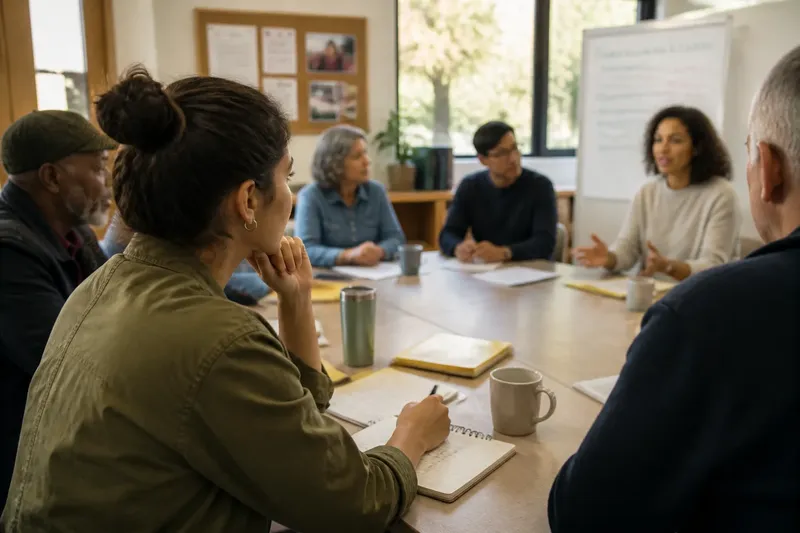
You have found the community hall, opened the video call, or taken a seat beside people who already know one another. Your first meeting can feel easier if you give yourself a small plan rather than trying to prepare for every possible turn. A first meeting plan starts with three things: find out what the group is here to do, write down one question, and choose when listening will help more than speaking.
This is not a script for making a strong impression. It is a way to take part without pretending to know the group’s history or rushing to fill a pause. The routine below begins several days before the meeting and ends with a brief note to yourself afterwards.
A few days ahead, find the meeting’s purpose
Look for the invitation, agenda, meeting page or message that explains why people are gathering. You are not trying to learn every detail. You want a plain answer to: what is this group meeting to discuss, decide or organise?
Notice the difference between a meeting that is sharing information and one that is asking members to make a choice. A neighbourhood association might be hearing an update about a park clean-up, while a later item asks whether volunteers should meet on Saturday or Sunday. Those call for different kinds of participation. You may mainly listen during an update; a choice may be a good place to offer a view or ask what options are still open.
If the purpose is unclear, check the invitation for a contact name and send a short, courteous question. For example: “I’m new to the group. Is the meeting mainly for updates, or will there be a decision I can contribute to?” A clear reply can help you prepare without asking anyone to brief you on the group’s entire history.
Also check practical details that could otherwise occupy your attention: the location or link, the start time, whether guests may attend, and whether there is a way to ask for access support. For a remote meeting, confirm that you can open the platform and that your display name is recognisable. For an in-person meeting, check the room or entrance information rather than relying on a vague venue name.
The day before, choose one question
Write down one question that would help you understand the discussion or make a useful contribution. Keeping it to one is not a rule against having opinions. It gives you a steady point to return to if several topics or unfamiliar names come up at once.
A good question is specific enough to answer and open enough to invite clarification. You might ask, “Who will use this room most often?” or “What needs to be settled tonight, and what can wait?” If the meeting concerns a shared garden, you could ask how the group will decide which areas need attention first. That is more useful than a broad question such as “What is going on?”
Use the meeting information to make the question relevant, but do not assume that the printed agenda tells the whole story. A short item title may leave out the background that matters to you. If your question touches on a subject you know little about, phrase it as a request to understand, not as a challenge: “Could someone explain how that choice affects people who use the space in the evening?”
Put the question somewhere easy to find: in the margin of a paper agenda, in a phone note, or on a small card. Add a few words about why you are asking. That reminder can help you decide whether the question still fits when the discussion reaches the topic.
Before setting out, decide when listening comes first
Choose one or two moments when you will give yourself time to listen before speaking. You might wait until you have heard the different options, until the meeting chair has explained the process, or until someone has clarified a term you do not know. This is not a promise to stay quiet. It is a way to avoid reacting to the first sentence you hear.
Listening first is especially helpful when people refer to earlier conversations, use local shorthand, or describe a concern from a perspective you have not considered. You can note a name, phrase or question for later instead of trying to catch up and speak at the same time. If the discussion moves on before you understand, ask for a brief explanation rather than guessing.
Make a simple personal plan for taking the floor, too. You could raise a hand, use the meeting’s speaking queue, or wait for a pause if the group has no formal process. If you are attending online, find the mute and hand-raise controls before the discussion begins. These small choices make it easier to contribute without interrupting someone.
Say you are joining a tenants’ meeting about a shared laundry room, and the invitation lists an update on opening hours and a discussion about a noticeboard. You arrive with one question: “Who is the noticeboard meant to serve?” You decide to listen through the first few comments before asking it. If you hear that the board is mainly for practical building notices, you can make your question more precise; if that purpose is already clear, you may not need to ask it at all. The preparation gives you options rather than a line you must deliver.
At the start, learn how this group works
When the meeting begins, listen for basic signals: who is chairing, how people indicate they want to speak, and whether the group is taking questions during each item or at the end. Different groups have different habits. You do not need to memorise them immediately, but noticing them can make participation smoother.
If introductions are invited, keep yours brief and relevant. You might give your name and say how you came to the meeting or what connection you have to the subject. You can also pass if that feels more comfortable or if the chair says introductions are optional. You do not need to present a complete biography to earn a place in the conversation.
Keep the purpose and your question close, but let the discussion update your understanding. A useful note might be a point you want explained, a person or role to follow up with, or a part of the topic you have not heard addressed. Avoid writing down every sentence. You are there to participate, not to produce an unofficial transcript.
During discussion, contribute with care
When a natural opening comes, introduce your point in a sentence or two. Connect it to what has just been said, then ask your prepared question or share the relevant experience you bring. If your point needs more context, offer the short version first and let others invite the detail they need.
Try to separate what you know from what you are wondering. “I use the entrance after work, and I’m unsure how this proposal would affect evening access” is clearer than presenting an assumption as settled fact. If someone corrects a detail, you can acknowledge it and adjust your question. That keeps the conversation focused on the issue rather than on defending a first impression.
Watch for signs that the chair is trying to make room for other voices or move to the next item. If you have already spoken, consider leaving space before adding another point. If you have not found a suitable opening, you can ask whether there will be time for questions later, or send a concise note to the group’s contact after the meeting. Not every contribution has to happen in the room at the first possible moment.
You are also allowed to say that you are still learning the background. A simple “I’m new to this, so I may be missing some context” can make your question easier to place. Keep it brief; there is no need to apologise for attending or to turn uncertainty into a long disclaimer.
When should I speak at a first meeting?
Should I wait until I understand the whole discussion?
You do not need to understand every past decision before contributing. Listen long enough to grasp the current question, and ask for missing context when it affects what you want to say.
What if I cannot find a moment to speak?
Use the group’s speaking process if there is one, or ask the chair when questions can be raised. If the item has closed, a short follow-up message may be more useful than interrupting the next discussion.
What if someone disagrees with my question?
Let them explain what they see differently, then clarify what you meant if needed. A question can still be useful even when it reveals that people understand the issue in different ways.
Do I need to volunteer for a task?
No. You can contribute by listening, asking for clarification or sharing relevant information. If a task interests you, ask what it involves and when the group needs a response before agreeing.
Afterwards, make a small note for next time
Once you have left the room or closed the call, take a moment to record what would help you participate next time. You might note a term to look up, a contact person, a meeting habit you want to remember, or a question that remains unresolved. Keep this separate from official minutes unless the group has asked you to take notes.
If you want to follow up, send a brief message while the conversation is fresh. Thank the relevant person, mention the subject in a sentence, and ask one clear question or offer the information you promised. If the matter is personal or sensitive, use the group’s appropriate contact route rather than posting it to a public channel.
For your next first meeting plan, keep the same three anchors: know why the group is gathering, bring one question, and choose a moment to listen before you speak. You can change the details as you learn the group’s customs. The useful result is not a flawless contribution; it is arriving ready to understand the discussion and take part in a way that suits the moment.